7 Days in Albania: The Ideal First-Timer Itinerary, Day by Day
By Ermal · July 10, 2026 · 10 min read
One week, both UNESCO towns, the Blue Eye, the Riviera and the Llogara Pass — with realistic driving times and where to sleep each night.
Seven days in Albania is enough for both UNESCO towns, the Blue Eye, a full Riviera beach day and the best mountain road in the country — provided you route it as one loop and never schedule more than three hours of driving in a day. This is that loop, day by day, with the timings we actually plan around.
It is the most common trip length we're asked to build, and the one that goes wrong most often, almost always for the same reason: people try to add the Albanian Alps. Theth and Valbona are magnificent and they do not fit in seven days alongside the south. Trying anyway turns a holiday into a driving marathon. Give the north its own trip, or give this one ten days.
Everything below works as a self-drive or as a guided trip. Either way, two rules from our main road trip guide apply double on a one-week clock: three hours of driving is the daily ceiling, and mapping apps underestimate Albanian roads by roughly a third.
The shape of the loop: capital first, then south through the UNESCO towns, hit the coast at its southern tip and drive the Riviera north, finishing over the Llogara Pass. It is a genuine loop, so you start and end at Tirana airport without repeating a single road.
Day
Where
Driving
Sleep in
1
Tirana: Skanderbeg Square, Bunk'Art, Blloku
None
Tirana
2
Bovilla Lake & Gamti viewpoint hike
~2 hrs return
Tirana
3
Berat: castle quarter, Onufri Museum, winery
2 hrs
Berat
4
Gjirokastër: fortress, bazaar, Skenduli House
3–3.5 hrs
Gjirokastër
5
Blue Eye spring, Butrint & Ksamil
2 hrs
Saranda/Ksamil
6
Riviera beach day: Gjipe or Livadhi
2 hrs
Himarë
7
Llogara Pass, lunch in Vlora, return
3.5 hrs
—
Whatthisweekassumes
A few planning decisions are baked into the route, and they are worth making deliberately rather than discovering on day three.
You fly into and out of Tirana (TIA). Flying out of Corfu instead is possible via the Saranda ferry, but it breaks the loop and costs you the Llogara Pass — the best road of the week.
You have a car from day two. You do not want one on day one; Tirana is for walking and the parking is a nuisance.
You are travelling between May and early October. Outside that window the Riviera largely closes and a beach day stops making sense.
You accept one long-ish drive. Day four, Berat to Gjirokastër, is three and a half hours. Everything else is short.
Day1:Tirana,onfoot
Land, drop the bags, and do not collect a car. Tirana's centre is compact and everything on day one is walkable: Skanderbeg Square, the mosaic-fronted National History Museum, the restored Et'hem Bey Mosque, and the Pyramid — Enver Hoxha's former mausoleum, now a concrete climbing frame full of teenagers and a genuinely good piece of adaptive reuse.
Give your museum time to Bunk'Art 1, the five-storey Cold War bunker complex on the city's edge. It is the single most useful two hours you can spend in Albania, because it explains the bunkers, the isolation and the emptiness you will notice everywhere for the rest of the week. Bunk'Art 2, in the centre near Skanderbeg Square, is smaller and covers the secret police — take it if you want the shorter version.
Finish in Blloku, the quarter that was sealed off for the Party elite until 1991 and is now wall-to-wall bars. Eat late; Albanians do.
Day2:BovillaLake,theonenobodyexpects
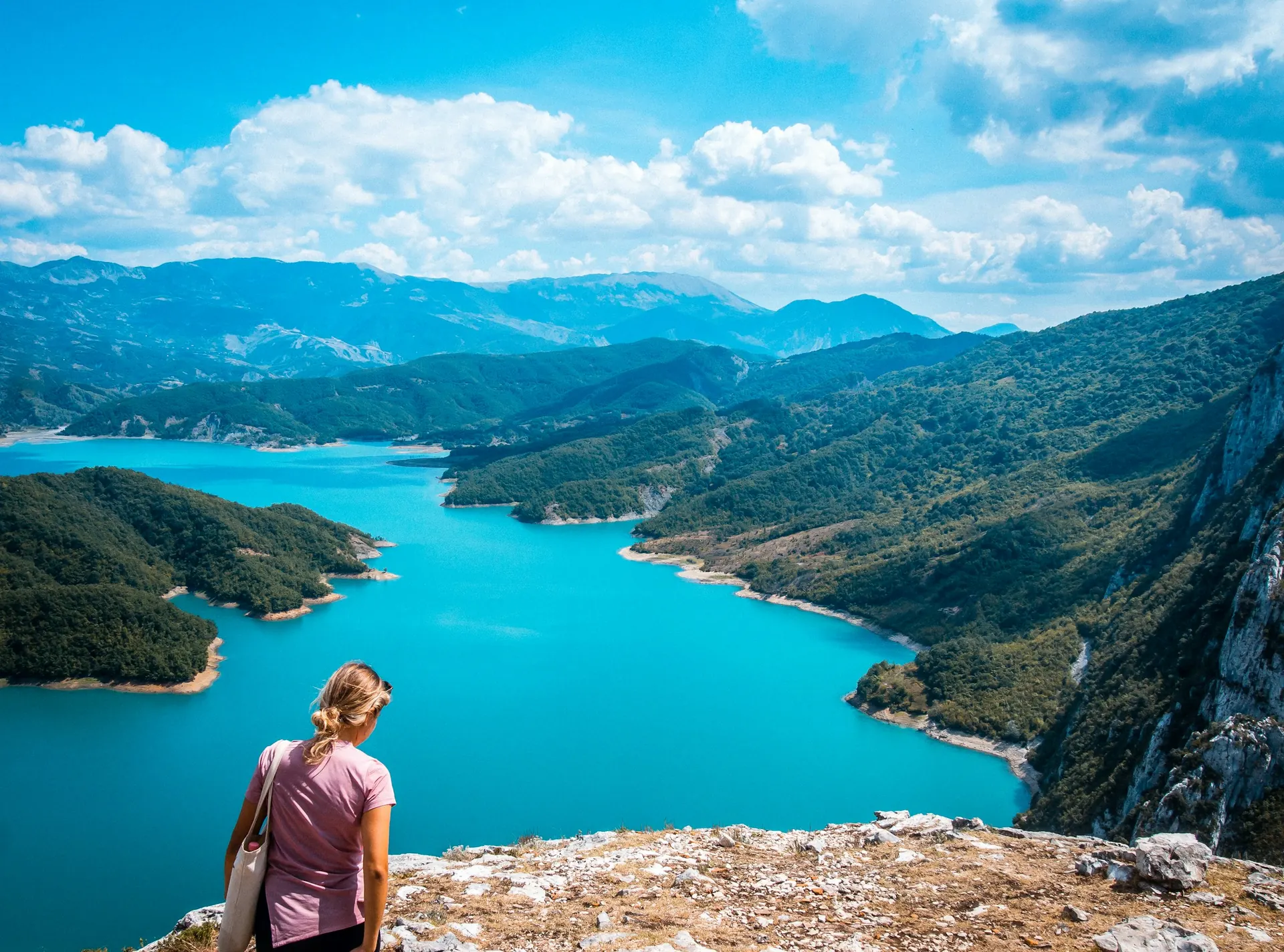
Forty minutes from the boulevard, Bovilla Lake sits turquoise in a limestone gorge that would be a national park in most countries and is, here, simply the reservoir that supplies Tirana's drinking water. The stepped trail to the Gamti Mountain viewpoint takes 30–40 minutes of steady uphill and delivers the best photograph of the trip's first half: the lake folding back on itself between white cliffs, with nothing built anywhere in the frame.
It is not a hard walk, but it is exposed, the rock is slippery when wet, and there is no shade on the ridge. Go early, take more water than you think, and wear something with grip — we see people attempt it in sandals every summer.
The catch is the access road. The last few kilometres to the trailhead are rough gravel with a drop on one side, and most rental agreements quietly exclude it. This is the one day of the week where a high-clearance vehicle genuinely matters, which is why many people run it as a guided half-day and keep their own rental simple.
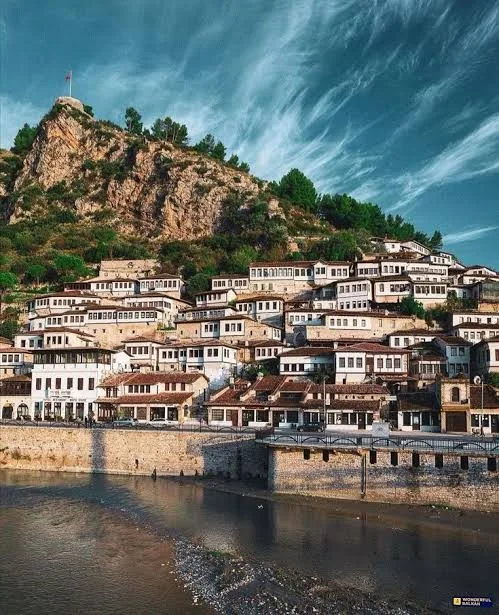
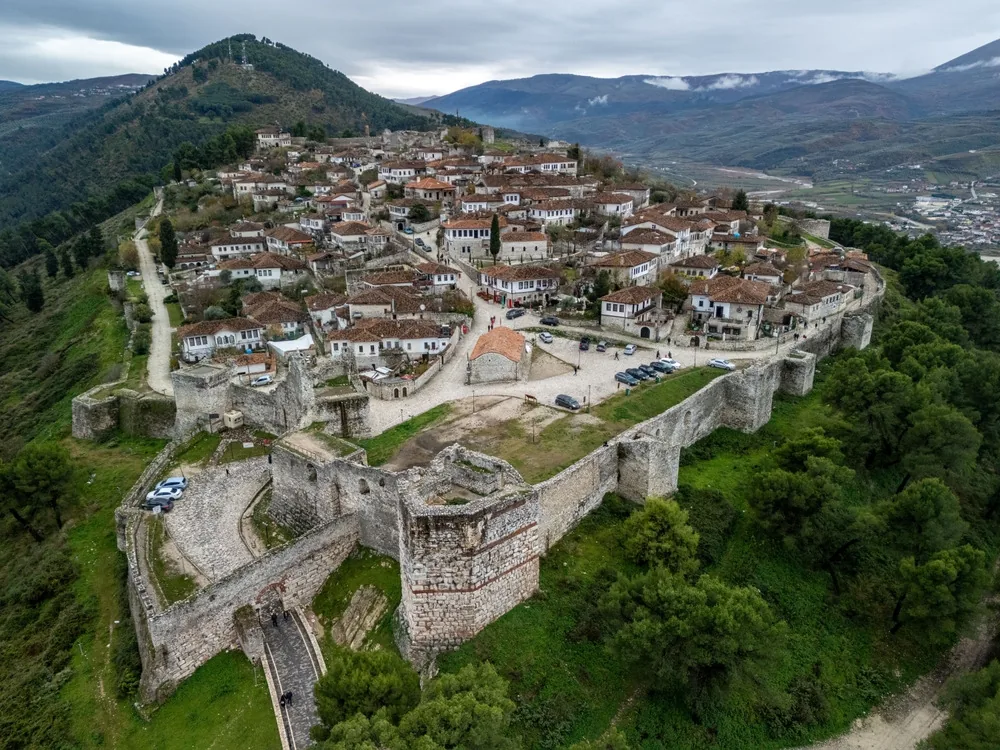
Two hours south through olive country, on good road the whole way. Berat is the postcard everyone has seen: white Ottoman houses stacked in tiers above the Osum river, their windows all facing the same direction, which is where the nickname comes from.
The castle is the thing that surprises people. It is not a ruin you tour — it is an inhabited neighbourhood inside Byzantine walls, with families, washing lines, cats and a handful of small churches still standing among the houses. Inside it, the Onufri Museum holds the crimson-heavy icons of Albania's best-known medieval painter, in the cathedral at the top of the hill. Allow two hours, more if you like walking the walls.
Down in the town, cross the 1780s Gorica bridge about an hour before sunset. That is the classic thousand-windows view, and the light does the work for you.
Sleep in the old town — Mangalem to be under the castle, Gorica across the river to look at it.
Park at the bottom and walk up. The castle lane is cobbled, steep and not worth attempting in a hire car.
Eat përshesh, the local cornbread-and-butter dish, and drink something made from the Pulës grape — it grows nowhere else on earth.
The Osum canyon is an hour further east if you have a spare morning and fancy rafting.
This is the longest drive of the week — three to three and a half hours, not the two your phone will promise — so start it after breakfast rather than after lunch. The road runs south through Tepelenë and the Drino valley, and it is a pretty drive rather than a chore.
Gjirokastër climbs a mountainside in slate and whitewash, and it is a genuinely different place from Berat despite both being Ottoman UNESCO towns: harder, greyer, more fortified, built by people who expected trouble. The castle is one of the largest in the Balkans, with vaulted galleries, a captured American reconnaissance plane parked incongruously on the terrace, and battlements looking straight down the valley.
In the bazaar quarter, the Skenduli House is the one to tour — a 300-year-old merchant house still owned by the family that built it, and usually shown to you by a Skenduli. The Zekate House higher up is grander and quieter. Order qifqi for lunch: herbed rice balls, fried, found in this town and essentially nowhere else.
Day5:theBlueEye,ButrintandKsamil
Leave early — this is the day that rewards it most. The Blue Eye (Syri i Kaltër) is a karst spring welling up from more than fifty metres down, so cold and so clear that the water reads as a colour no photograph has ever got right. Nobody has found the bottom. It is roughly forty minutes from Gjirokastër over the Muzina Pass, and by eleven in summer the coach parties have arrived, so aim to be there by nine.
Then down to the coast for Butrint National Park: a Greek theatre, Roman baths, an early Christian baptistery and a Venetian castle stacked on one forested peninsula above a lagoon, with the whole thing quiet and shaded and largely free of crowds even in August. Two hours minimum. It is the most complete ancient site in the country and the entrance fee is still under ten euro.
Finish at Ksamil, fifteen minutes north, for the first proper swim of the trip — white sand, shallow turquoise water and four small islands close enough to paddle out to.
Day six is deliberately the slow one. Drive the coast road north with swim stops and no schedule — this is the day guests consistently tell us afterwards was their favourite, and it is the day people are most tempted to fill with something. Don't.
Gjipe is the one we recommend most: a canyon mouth opening onto white pebbles, reachable only on foot — about 25 minutes down a track from where you leave the car — or by boat. The walk filters out the great majority of the crowd, and there is a small beach bar that runs on cash. It is the most beautiful beach in the country and the twenty-five minutes are the reason.
If you want easy access instead, Livadhi just north of Himarë is a long horseshoe of pebbles with olive terraces behind it and room even in July. Jale sits between the two, smaller and younger. Sleep in Himarë and eat fish on the waterfront.
Bring cash to every beach. Sunbeds, bars and parking attendants are all lek-only.
The coastal road is slow by design — 70 km between Saranda and Himarë takes two hours. That is normal, not a wrong turn.
Swim shoes are worth it. Most Riviera beaches are pebble, not sand.
Aquarium Bay, next to Jale, is reachable only by boat or a scramble, and is the best snorkelling on this stretch.
Day7:theLlogaraPassandhome
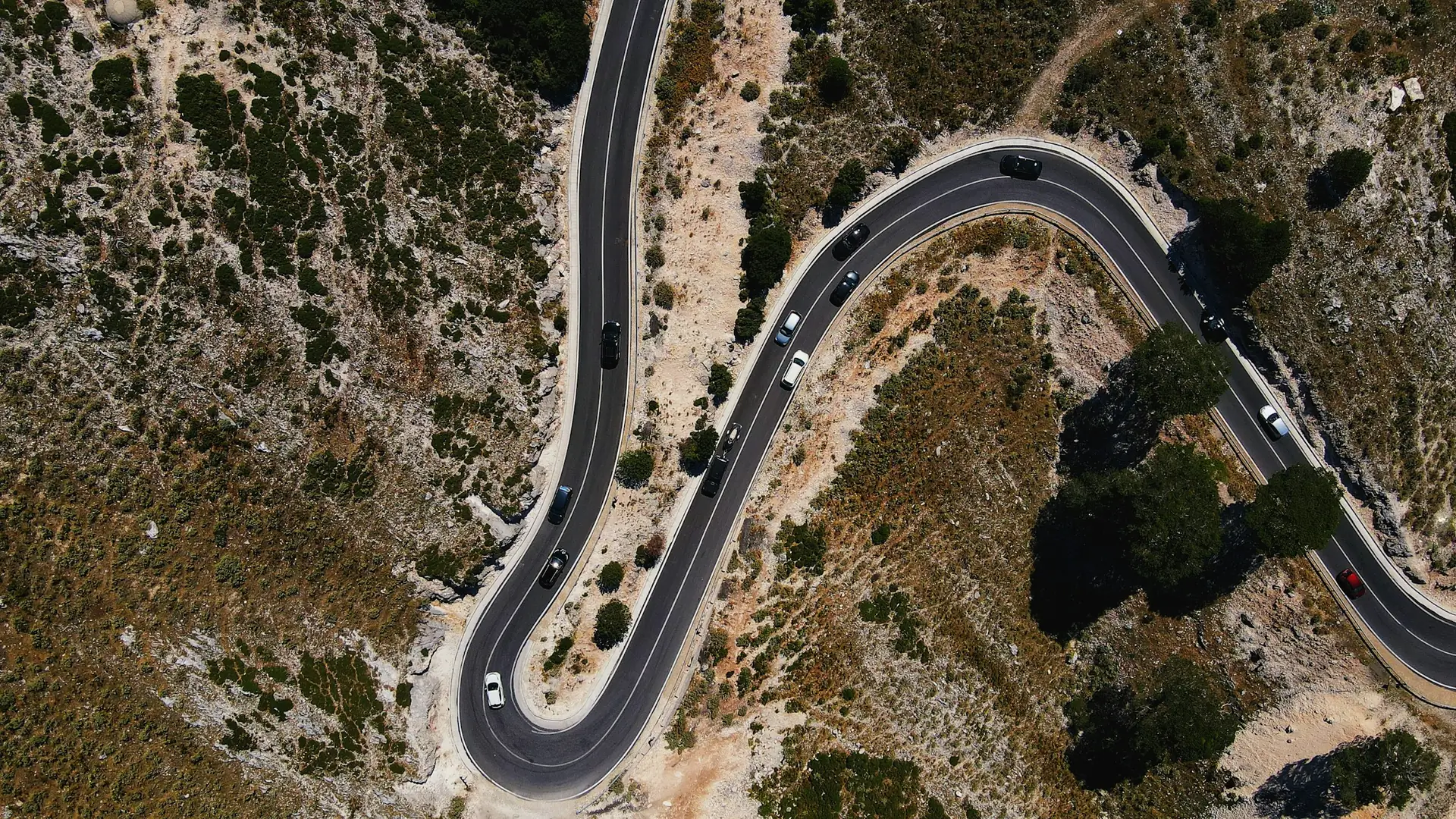
The last day saves the best road for last. The Llogara Pass climbs from sea level to a bit over a thousand metres in a series of hairpins, through pine forest, with the entire Riviera unrolling behind you every time you look back. Stop at the top. There is a viewpoint and usually someone selling honey, and it is the view of the trip.
Over the pass the landscape changes completely — the drama ends and the coastal plain begins. Lunch in Vlora, where the Adriatic and Ionian meet, then an easy two and a half hours of fast dual carriageway back to Tirana. Budget an hour of slack before a flight; the approach to the airport is the only reliably congested road on the route.
Whattheweekcosts
For two people sharing, outside peak August, this is roughly what a self-driven version of this week runs to. It is one of the cheaper weeks in Europe, and the car is the biggest line rather than the fuel.
Item
Week total (2 people)
Note
Car hire, 6 days
€210–360
Compact; book ahead for automatic
Fuel
€60–90
The full loop is roughly 900 km
Accommodation, 6 nights
€210–420
Family-run guesthouses, breakfast usually included
Food and drink
€200–350
Dinner for two runs €20–35 with wine
Entrances and parking
€60–100
Butrint, both castles, beach parking
Rough total
€740–1,320
Excluding flights; add 30–40% in August
Ifyouonlyhavefivedays
Cut day two and day six — the Bovilla hike and the slow Riviera day — and run Tirana, Berat, Gjirokastër, Blue Eye and Butrint with one night on the coast. You lose the swimming and the best walk, but you keep both UNESCO towns and the ancient site, and no day gets longer.
What we would not cut is a night in each of Berat and Gjirokastër. Day-tripping either of them from somewhere else means seeing them at the same hour as every tour bus, and the whole pleasure of both towns is the evening after the buses leave.
Driveityourself,ordon't
Self-driving this loop is very doable. Main roads are good asphalt, fuel is cheap, distances are short, and other than the Bovilla track nothing on this route demands a special vehicle. Budget around €35–60 a day for the car, carry lek for village cafés and beach parking, and read our road trip guide for the driving specifics.
If you'd rather watch the scenery than the road, our 7-day guided road trip runs this exact loop — with the Komani Lake ferry and Kruja added — with a local guide-driver, handpicked family hotels and a maximum of eight guests. It also removes the three things guests find most tiring about the self-drive version: the parking, the checkpoints and the daily hunt for dinner.
Gotmoretime?
If a week feels tight, the 10-day route bolts the Albanian Alps onto the front of this same loop — Shkodër, two nights in Theth and the Komani Lake ferry south — without touching the southern half. The 14-day route adds Korça, Lake Ohrid and the full Theth–Valbona pass crossing on top of that.
Walk the white Ottoman lanes of Albania's most beautiful town, climb to a castle people still live in, and taste wine that's been made here for 2,400 years.
Forty minutes from central Tirana there's a turquoise reservoir framed by limestone cliffs. One short, steep trail climbs to the viewpoint over the lake.
Half day
From€21
Frequently asked questions
01Is 7 days enough for Albania?
Yes, for the highlights: both UNESCO towns (Berat and Gjirokastër), the Blue Eye, Butrint, one full Riviera beach day and the Llogara Pass all fit in a week with no day exceeding three hours of driving. You'll skip the Albanian Alps — that's what a 10-day trip adds.
02How much driving is a 7-day Albania road trip?
About 16 hours in total across the week, and never more than three and a half hours in a single day. Distances look tiny on the map, but mountain bends and coastal switchbacks mean mapping apps run short — plan a third more time than they show.
03Where should you stay on a one-week Albania itinerary?
Two nights in Tirana, then one night each in Berat's old town, Gjirokastër, Saranda or Ksamil, and Himarë. Sleeping in the UNESCO towns rather than day-tripping them means you get the lanes to yourself in the evening after the tour buses leave.
04Can you see the Albanian Alps in 7 days as well?
Not comfortably. Theth and Valbona sit five hours north of Berat, and adding them to this loop means two long transit days and cutting the coast. If the mountains are the priority, either give Albania ten days or build a separate northern trip around Shkodër, Theth and the Komani ferry.
05What does a week in Albania cost?
Roughly €740–1,320 for two people excluding flights, outside peak season: around €210–360 for six days of car hire, €60–90 of fuel, €210–420 for six nights in guesthouses, and €200–350 on food. August runs 30–40% higher, particularly on the coast.
06Can you do this Albania itinerary without a car?
Mostly, using intercity buses and furgons, but you'll lose about a day to loose timetables and the Bovilla and Gjipe legs get hard. The no-stress alternative is a guided version: our 7-day road trip runs the same loop with a local guide-driver and hotels arranged.
Want to see it with a local?
Our small-group tours cover everything in this guide: pickup, guide and advice included.
 Multi-Day
 History
 Nature